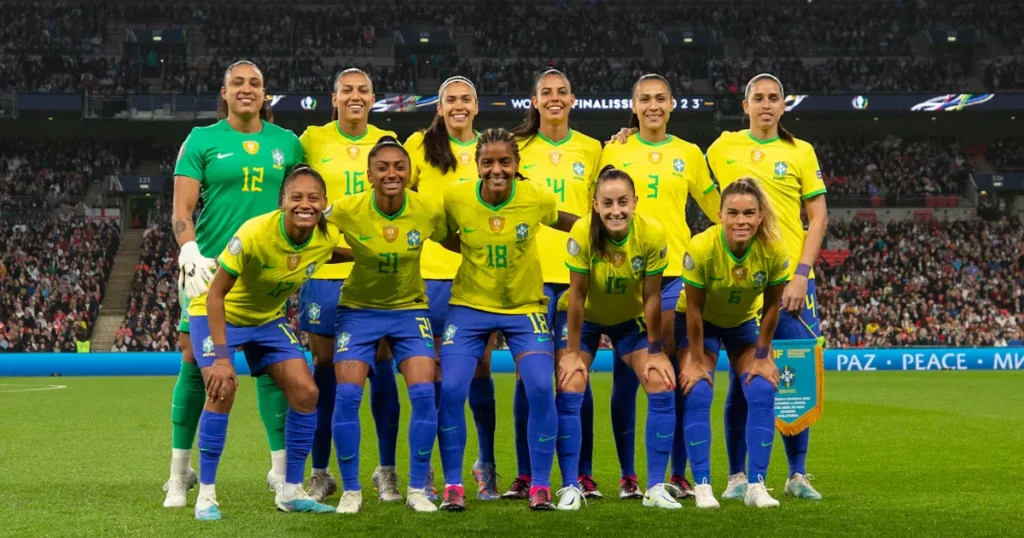
When it comes to global football, few names evoke as much awe, excitement, and sheer cultural resonance as the Brazil national football team. Known affectionately as A Seleção or the “Canarinho” (Little Canary) for their iconic yellow jerseys, this squad isn’t just a team—it’s a symbol of joy, resilience, and artistic expression on the pitch. With five FIFA World Cup titles under their belt, Brazil stands alone as the most successful nation in the tournament’s history. But beyond the trophies, the Brazil football team embodies the spirit of a country where football is woven into the fabric of daily life, from sun-drenched beaches in Rio to bustling streets in São Paulo.
In this deep dive, we’ll explore the rich tapestry of the Brazil national football team: its storied history, jaw-dropping achievements, legendary players, innovative tactics, pulse-pounding recent results, and what’s on the horizon with their Brazil next match and beyond. Whether you’re a die-hard fan or a newcomer captivated by the jogo bonito (beautiful game), buckle up—this is the ultimate guide to why Brazil continues to mesmerize the world.
A Storied History: From Humble Beginnings to Global Dominance
The Brazil national football team didn’t burst onto the scene fully formed; their journey is a classic underdog tale laced with triumph and heartbreak. Officially founded in 1914 under the Brazilian Football Confederation (CBF), the team’s inaugural match was a murky affair against England’s Exeter City in Rio de Janeiro. Reports vary—some say Brazil won 2-0, others claim a 3-3 draw—but what mattered was the spark it ignited in a nation hungry for identity.
Football arrived in Brazil via British expatriates in the late 19th century, quickly evolving from an elite pastime to a mass obsession. By the 1920s and 1930s, Brazil was competing in South American championships, but early international forays were rocky. Losses to Argentina and Uruguay stung, and internal debates over professionalism hampered progress. Yet, the 1938 World Cup marked a turning point: Brazil reached the semi-finals, showcasing glimpses of the flair that would define them.
The real revolution came post-World War II. Hosting the 1950 World Cup was meant to be a coronation, but the infamous “Maracanazo”—a 2-1 final loss to Uruguay in front of 200,000 stunned fans at the Maracanã Stadium—scarred the nation. It prompted a makeover: the all-white kit was scrapped for the now-iconic yellow, blue, and green of the Brazilian flag. This resilience fueled their ascent. By 1958, a teenage Pelé led them to glory in Sweden, and the rest is history etched in gold.
Over decades, Brazil has participated in every World Cup (a unique feat), transforming from inconsistent challengers to perennial powerhouses. Their story is one of reinvention: absorbing European discipline while preserving South American creativity. Today, as they eye a sixth star in 2026, the Brazil football team remains a beacon of hope, reminding us that even giants fall, only to rise with samba-infused swagger.
Major Achievements: Five Stars and Counting
If history is the canvas, achievements are the masterpieces for the Brazil national football team. No other nation comes close to their haul: five FIFA World Cup wins in 1958, 1962, 1970, 1994, and 2002. These triumphs span four continents, a testament to their adaptability—from Sweden’s chill to Japan’s humidity.
The 1958 victory was poetic: 17-year-old Pelé’s emergence silenced doubters, with Brazil thrashing Sweden 5-2 in the final. Four years later in Chile, an injured Pelé watched from the sidelines as Garrincha’s wizardry carried them to back-to-back titles. The 1970 Mexico squad? Often hailed as the greatest ever—a 4-1 final romp over Italy, with that iconic team goal from Carlos Alberto sealing eternal fame.
Revivals followed slumps: 1994’s penalty shootout win over Italy ended an eight-year drought, while 2002’s Ronaldo-led charge (eight goals) dismantled Germany 2-0. Beyond the World Cup, Brazil boasts nine Copa América titles (most recent in 2019), four FIFA Confederations Cups, and Olympic gold in 2016 and 2020. They’ve racked up 72 official international titles across levels, a world record.
These aren’t just stats; they’re cultural milestones. Each win unites 200 million Brazilians in euphoria, while losses—like 2014’s 7-1 semi-final humiliation—spark national soul-searching. In the latest FIFA rankings, Brazil sits at No. 5 (as of November 2025), a dip from their usual perch but a reminder of their enduring elite status. The Brazil FIFA ranking fluctuates, yet their legacy screams immortality.
To capture this dominance at a glance, here’s a table of their World Cup triumphs:
| Year | Host Country | Final Score | Key Player | Notable Moment |
|---|---|---|---|---|
| 1958 | Sweden | 5-2 vs. Sweden | Pelé (17 years old) | Pelé’s debut brace in semis |
| 1962 | Chile | 3-1 vs. Czechoslovakia | Garrincha | “Little Bird” dazzles without Pelé |
| 1970 | Mexico | 4-1 vs. Italy | Pelé | Carlos Alberto’s team goal of the century |
| 1994 | USA | 0-0 (3-2 pens) vs. Italy | Romário | Baggio’s miss; first pentacampeão |
| 2002 | South Korea/Japan | 2-0 vs. Germany | Ronaldo | O Fenômeno’s eight goals, Golden Boot |
This table underscores why Brazil’s achievements aren’t just wins—they’re symphonies of skill that have redefined football.
Iconic Key Players: Legends Who Defined Generations
The Brazil football team is synonymous with superstars who transcend the sport. From Pelé’s 1,279 career goals to Neymar’s balletic dribbles, these icons aren’t just players; they’re national treasures.
Pelé (1957-1971) is the blueprint: three World Cups, 77 international goals, and a flair that made football poetic. Garrincha (1957-1966), the “Bent-Legged Angel,” won two Cups with bow-legged genius, outdribbling defenders like they were statues. The 1970 midfield maestros—Gérson, Clodoaldo, and Rivellino—added tactical poetry, while Tostão and Jairzinho’s wings terrorized foes.
The 1990s-2000s brought Romário’s predatory instincts (1994 hero) and Ronaldo’s blistering pace (2002 phenom). Ronaldinho’s 2002-2006 joy—those no-look passes and free-kicks—rekindled jogo bonito. Zico (1976-1986), the “White Pelé,” lit up the 1982 team that lost but won hearts.
Fast-forward to now: As of November 2025, the squad blends veterans and prodigies. Captain Danilo anchors midfield with experience (2019 Copa América winner). Alisson Becker’s shot-stopping in goal is world-class. Defensively, Marquinhos and Éder Militão form a rock-solid duo. Midfield maestro Bruno Guimarães dictates play with Premier League polish, while Raphinha’s Barcelona zip adds edge.
Attack? Vinícius Júnior’s explosive left-wing runs (Real Madrid star) and Rodrygo’s versatility shine. Endrick, the 18-year-old Palmeiras sensation, embodies the next Pelé—already with senior caps and a Champions League medal. Neymar, post-injury return in 2025, brings magic at 33, though fitness clouds his 2026 role. João Pedro (Brighton) and Matheus Cunha (Wolves) vie for striker spots, blending power and finesse.
These players aren’t just talented; they carry Brazil’s soul—creative, fearless, and forever entertaining.
Tactics and Playing Style: The Evolution of Jogo Bonito
What sets the Brazil national football team apart? Their tactics evolve, but the core—jogo bonito—remains: fluid, attacking football laced with improvisation and joy. Early days favored 4-2-4, a wide-open assault birthed in the 1950s by coach Flávio Costa. It exploded in 1958: two banks of four, with wingers bombing forward and midfielders linking seamlessly.
By 1970, Mário Zagallo refined it to 4-3-3, balancing attack with structure—Pelé as a free-roaming No. 10, full-backs overlapping like Nílton Santos. The 1982 side under Telê Santana was pure artistry: Zico-Sócrates-Falcão triangle, prioritizing beauty over results (they exited early but inspired generations).
Modern Brazil adapts without losing flair. Tite’s 2016-2022 era introduced 4-1-4-1: compact defense, high pressing, then unleashing Neymar/Vinícius in transitions. Possession hovers at 60%, with emphasis on 1v1 duels—Brazil leads in successful dribbles per game.
Under Carlo Ancelotti (appointed May 2025), expect pragmatism fused with samba. His Real Madrid success (five Champions Leagues) brings tactical versatility: 4-3-3 for control, switching to 4-2-3-1 for counters. Ancelotti favors Bruno Guimarães as pivot, freeing Raphinha and Vinícius. Defensively, it’s zonal marking with man-pressure bursts. The result? A team that’s beautiful and brutal—scoring 2.5 goals per game in 2025 qualifiers while conceding under one.
Critics say Brazil sometimes over-relies on individuals, but that’s the charm: tactics serve the artists, not vice versa.
Recent Results: A Rollercoaster Ride in 2025
2025 has been a mixed bag for the Brazil football team—a blend of grit, glitches, and growth pains under Ancelotti. Already qualified for 2026 via a gritty campaign, they’ve notched highs and lows, testing the new coach’s mettle.
January’s friendlies set a tone: a 3-1 win over Mexico showcased Vinícius’s speed, but a 2-2 draw with Egypt exposed midfield frailties. March qualifiers were brutal: a shocking 4-1 loss to Argentina in Buenos Aires (Messi’s farewell masterclass) stung, followed by a goalless draw vs. Ecuador. Fans rioted in São Paulo, but it sparked fire.
April rebounded with a 2-0 blanking of Peru at home, Endrick’s debut goal stealing headlines. June’s 1-0 squeaker over Paraguay sealed qualification—Danilo’s header the difference. Ancelotti’s first win came in August: 3-0 vs. Chile, Raphinha bagging a brace.
September’s qualifiers were choppy: a humiliating 1-0 loss to Bolivia at altitude (first in 25 years) raised eyebrows, but a 3-0 demolition of Chile restored pride. October friendlies dazzled—a 5-0 rout of South Korea (Rodrygo hat-trick) contrasted a narrow 3-2 defeat to Japan, where defensive lapses cost them.
November’s internationals (as of the 19th) capped the year: a solid 2-0 friendly win over Senegal at Emirates Stadium (Vinícius and João Pedro scoring), followed by a frustrating 1-1 draw with Tunisia in Lille. Tunisia’s equalizer in the 85th extended their unbeaten run but left Brazil with mixed feelings—strong attack, but finishing woes.
Overall, 2025’s record: 8 wins, 4 draws, 4 losses across 16 games. Goals: 28 scored, 15 conceded. It’s progress from 2022’s quarterfinal exit, but consistency eludes them. The Brazil next match? Friendlies wrap the year, but eyes turn to 2026 prep.
For a quick snapshot, here’s a table of key 2025 results:
| Date | Opponent | Result | Competition | Key Moment |
|---|---|---|---|---|
| Mar 25 | Argentina | 1-4 L | WC Qualifier | Messi’s brace crushes hopes |
| Jun 10 | Paraguay | 1-0 W | WC Qualifier | Danilo’s header qualifies Brazil |
| Sep 4 | Chile | 3-0 W | WC Qualifier | Raphinha double sparks joy |
| Sep 9 | Bolivia | 0-1 L | WC Qualifier | Altitude nightmare |
| Oct 10 | South Korea | 5-0 W | Friendly | Rodrygo’s hat-trick fireworks |
| Nov 15 | Senegal | 2-0 W | Friendly | Vinícius magic in London |
| Nov 18 | Tunisia | 1-1 D | Friendly | Late equalizer frustrates |
This table helps track the highs (qualification, blowouts) and lows (regional slips), fueling debates on Ancelotti’s blueprint.
Fan Culture: The Heartbeat of Brazilian Passion
No discussion of the Brazil national football team is complete without its fans—the torcedores who turn matches into carnivals. Football in Brazil isn’t a hobby; it’s religion, social glue, and therapy. Over 70% of the population identifies as fans, with Flamengo boasting 40 million supporters alone. The national team unites them: World Cup viewings halt the country, beaches become giant screens, and streets erupt in samba.
Fan culture thrives on rituals: yellow jerseys as second skins, chants like “Ôôô, Brasil!” echoing Maracanã’s rafters. Organized torcidas organizadas (like Raça Rubro-Negra for Flamengo) choreograph tifo displays and pyrotechnics, blending tribal loyalty with artistry. Rivalries? Superclásico with Argentina is blood feud; Uruguay’s Maracanazo haunts eternally.
Yet, it’s inclusive: favelas birth stars, women lead chants, and global diaspora packs stadiums (Qatar 2022 saw 60,000 Brazilian “tourists”). Tragedies like 2014’s 7-1 forge resilience—fans mourn, then dance again. Music ties it: samba anthems like “Aquarela do Brasil” pump pre-game vibes. For Brazilians, supporting A Seleção is identity: joy in victory, unity in defeat.
Future Outlook: Eyes on a Sixth Star in 2026
As 2026 dawns, optimism swirls around the Brazil football team. Qualified since June, they’re favorites (+400 odds) for the expanded 48-team tournament in the US, Mexico, and Canada. Ancelotti’s arrival injects calm genius—his 3-1-2 win rate in 2025 bodes well, blending youth (Endrick, 19) with vets (Alisson, 33).
Challenges? Neymar’s fitness (post-2023 ACL) and striker depth loom. But strengths abound: Vinícius’s Ballon d’Or buzz, Guimarães’s metronomic control, and a defense conceding 0.8 goals/game. Tactics evolve toward fluid 4-3-3, emphasizing counters and set-pieces.
The draw (December 5, 2025, Washington) could pit them against Europe/Asia pots early, but home-soil vibes (US games) favor them. Pundits predict semis minimum; a sixth title ends a 24-year drought, honoring Pelé’s legacy. With Ancelotti muttering “finale” vibes, Brazil’s outlook? Electric. Expect samba, shocks, and silverware.