
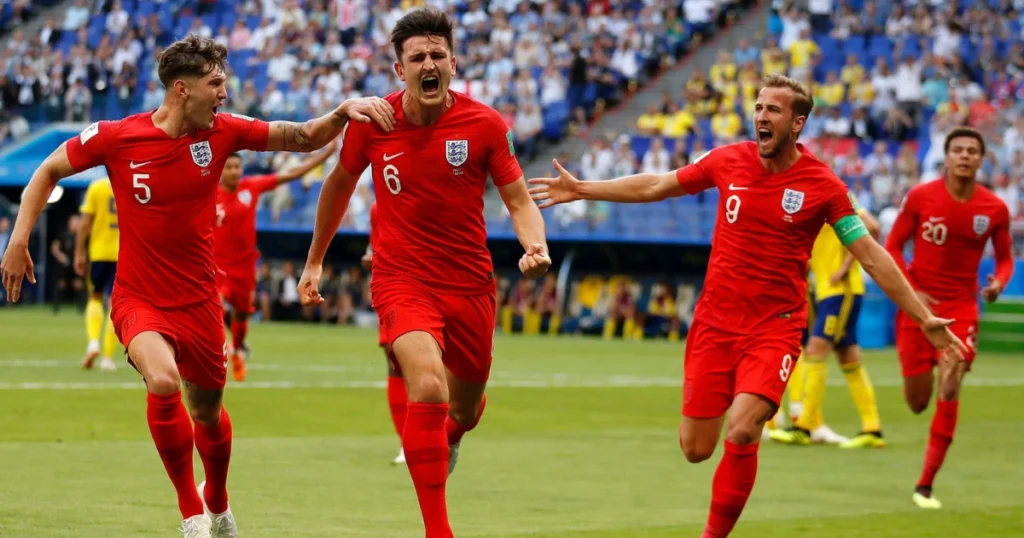
The England national football team, affectionately known as the Three Lions, stands as a symbol of passion, resilience, and unyielding national pride. From the misty fields of 19th-century Britain to the roaring stadiums of modern global tournaments, this squad has captured the hearts of millions. Whether you’re a die-hard supporter dreaming of Wembley anthems or a casual fan tuning in for the drama, the England football team embodies the beautiful game’s highs and heartbreaks. As we dive into their storied past, tactical evolutions, and road ahead, one thing’s clear: in a sport where underdogs can topple giants, the Three Lions are always primed for a roar.
With their current perch in the England FIFA ranking at a solid fourth place worldwide as of November 2025, the team is riding high on recent qualifiers and a blend of veteran savvy and youthful flair. But what makes this side tick? Let’s unpack the history, heroes, strategies, and fan frenzy that keep the conversation buzzing—and the SEO algorithms happy.
A Storied History: From Pioneers to World Champions
The England football team’s journey began in the birthplace of the modern game itself. Formed in 1863 by the Football Association (FA), England shares the title of the world’s oldest national team alongside Scotland. Their first official international clash came on November 30, 1872, against the Scots—a 0-0 draw at Hamilton Crescent in Glasgow that sparked one of football’s fiercest rivalries.
Early years were dominated by the British Home Championship, a gritty annual showdown with Scotland, Wales, and Ireland from 1883 to 1984. England claimed victory 54 times, often sharing the spoils in tense ties. But isolationism marked their initial global stance; despite joining FIFA in 1905, they boycotted the first three World Cups in the 1930s over amateur payment disputes and a sense of superiority as the sport’s inventors. It wasn’t until 1950 that they graced the World Cup stage, only to suffer a humiliating 1-0 loss to the United States—immortalized as the “Miracle on Grass.”
The Munich Air Disaster of 1958 cast a long shadow, claiming eight Manchester United players, including England stars like Roger Byrne and Duncan Edwards. Yet, from these ashes rose a golden era under Sir Alf Ramsey. His “Wingless Wonders”—a pragmatic, midfield-dominant side—stormed to the 1966 World Cup title on home soil. Geoff Hurst’s hat-trick in the 4-2 final win over West Germany at Wembley remains etched in folklore, the only major men’s trophy the team has lifted. It’s a feat that underscores England’s unique status: the sole non-sovereign nation to win the World Cup, yet still chasing continental glory.
The decades that followed were a rollercoaster of near-misses. The 1990 World Cup’s penalty heartbreak against West Germany, immortalized in Gazza’s tears, fueled the “58 years of hurt” chant. Euro 1996 brought home-soil hope, dashed again on penalties to the Germans. Under Sven-Göran Eriksson in the 2000s, the “Golden Generation” of Beckham, Gerrard, and Lampard dazzled but faltered in knockouts. Fast-forward to Gareth Southgate’s 2016 appointment: he ended the penalty curse with a 2018 World Cup semi-final run and back-to-back Euro finals in 2020 and 2024. Though silverware eluded them—a 2-1 Euro 2024 loss to Spain stung—Southgate rebuilt a winning culture, qualifying for 16 of 17 World Cups since 1950.
Today, with over 1,000 matches played (621 wins, 256 draws, 201 losses as of late 2025), England’s all-time record boasts a 57.6% win rate and a +1,335 goal difference. Rivalries with Germany (fueled by ’66 and ’90), Argentina (Hand of God in ’86), and Scotland (the world’s oldest fixture) add spice, but the narrative is one of evolution—from pioneers to perennial contenders.
Major Achievements: Trophies, Heartbreaks, and Historic Milestones
England’s trophy cabinet may not bulge like Brazil’s or Germany’s, but their highlights pack emotional punch. The 1966 World Cup reigns supreme: Ramsey’s squad, blending flair (Bobby Charlton) with steel (Bobby Moore), overcame Brazil in the quarters before that epic final. It’s the only senior men’s global title for a European side on home turf, with 32 World Cup wins tying them for sixth all-time.
Beyond that, the British Home Championship delivered 54 triumphs, cementing early dominance. Olympic golds in 1908 and 1912 (as Great Britain) showcased amateur prowess, though England proper skipped later editions. In Euros, they’ve reached semis four times (1968, 1996, 2018, 2024) but no final until Southgate’s era. The 2024 Nations League semi-final run added modern sheen.
Heartbreaks? Plenty. The 1950 US upset, 1986’s Maradona magic, and endless penalty woes (losing seven of 11 shootouts until 2018’s Colombia win) define the “nearly men” tag. Yet, records abound: Wayne Rooney’s 53 goals (all-time top scorer), Bobby Charlton’s 1966 Ballon d’Or, and Harry Kane’s 2024 Euro Golden Boot (three goals). As of 2025, England’s unbeaten against 54 nations, with perfect records over 30—like San Marino (eight wins). These milestones aren’t just stats; they’re the fuel for fan anthems and pundit debates.
Key Players: Stars Who Light Up the Pitch
The England football team boasts a golden generation 2.0, blending experience with explosive talent. Captain Harry Kane, Bayern Munich’s prolific striker, leads with 70+ goals for country, his hold-up play and free-kick wizardry unmatched. At 32 in 2025, he’s the fulcrum, sharing the Euro 2024 Golden Boot.
Midfield maestro Jude Bellingham (Real Madrid) is the heartbeat—versatile, visionary, and vice-captain at 22. His box-to-box energy and 30+ caps scream future legend. Flanking him, Phil Foden (Manchester City) dazzles with silky dribbles and vision, while Declan Rice (Arsenal) anchors with 50+ tackles per season.
Attackers Bukayo Saka (Arsenal) and Cole Palmer (Chelsea) provide width and wonder. Saka’s Euro heroics and penalty redemption embody resilience; Palmer’s 2025 emergence (first senior call-up) adds creativity. Defensively, John Stones (City) and Marc Guehi (Crystal Palace) form a composed backline, with Kyle Walker (City) bombing forward at right-back.
Emerging gems like Noni Madueke (Chelsea), Elliot Anderson (Nottingham Forest), and Djed Spence (Tottenham) got 2025 debuts, signaling depth. Goalkeeper Jordan Pickford (Everton) remains clutch, saving penalties like confetti. Under Tuchel, this squad—average age 26.2, height 1.82m—balances youth (Bellingham, Foden) with nous (Kane, Walker), poised for silverware.
Tactics: From Southgate’s Solidity to Tuchel’s Tactical Revolution
Gareth Southgate’s reign (2016-2024) transformed England from chaotic also-rans to tactical titans. His preferred 4-2-3-1 emphasized defensive resilience—high pressing, compact lines, and counter-attacks—yielding a 60% major tournament win rate. Wingers like Saka hugged touchlines for width, while Kane dropped deep to link play. Critics called it “dull,” but it delivered semis and finals, with innovations like the “buddy system” for penalties fostering mental toughness.
Enter Thomas Tuchel in January 2025, the third foreign boss after Eriksson and Capello. The German’s 3-4-2-1 or fluid 4-3-3 brings positional play and high-intensity pressing, echoing his Chelsea Champions League triumph. In 2025 qualifiers, England’s 100% win rate (six straight victories, 17 goals scored) showcased Tuchel’s tweaks: Bellingham and Foden as dual No. 10s for fluidity, Rice as a pivot for transitions, and full-backs (Walker, Spence) overlapping aggressively.
Against minnows like Andorra, dominance was laboured but effective; versus Serbia (5-0), flair erupted. Tuchel demands possession (71% average) and shots (18 per game), blending Southgate’s grit with club-level sophistication. Challenges? Integrating youth without disrupting harmony. But with expected goals (xG) soaring, this tactical shift eyes World Cup glory.
Recent Results: A 2025 Campaign of Conviction and Qualification
2025 has been England’s year of statement wins, cementing their World Cup ticket early. Under Tuchel’s bow, the Three Lions stormed qualifiers, becoming Europe’s first 2026 qualifiers with a perfect six-from-six record. Highlights? A laboured but assured 2-0 over Andorra (September 6), followed by a demolition of Serbia (5-0, September 9)—Kane, Bellingham, and Foden feasting.
October brought Latvia (5-0) and Albania (2-0 on November 16), with Noni Madueke’s screamer and Anderson’s debut assist shining. Overall: 17 goals in six games, zero conceded, 100% win rate. A June friendly loss to Senegal (1-0) exposed vulnerabilities—defensive lapses in heat—but qualifiers erased doubts. Euro 2024’s final hangover? Forgotten. Now, with 2.83 goals per game, England enters 2026 as favorites.
For a clearer snapshot of this blistering form, here’s a table summarizing England’s 2025 competitive results. This breakdown helps readers quickly grasp the momentum building toward the World Cup.
| Date | Opponent | Competition | Result | Scorers/Notes |
|---|---|---|---|---|
| March 21 | Latvia | World Cup Qualifier | 3-0 | Kane (2), Foden; Clean sheet |
| March 24 | Andorra | World Cup Qualifier | 4-0 | Bellingham, Saka, Palmer; Dominant possession |
| June 7 | Albania | World Cup Qualifier | 2-1 | Rice, Kane; Gritty away win |
| September 6 | Andorra | World Cup Qualifier | 2-0 | Madueke, Anderson assist; Laboured but solid |
| September 9 | Serbia | World Cup Qualifier | 5-0 | Kane, Bellingham (2), Foden, Saka; Statement rout |
| November 16 | Albania | World Cup Qualifier | 2-0 | Palmer, Walker; Early qualification secured |
This table underscores the blend of firepower and fortitude—perfect for fans tracking the surge.
Upcoming Fixtures: Eyes on the England Next Match and Beyond
With qualifiers wrapped, attention turns to friendlies and the 2026 World Cup draw (December 5, 2025, in Washington DC). The England next match post-November? A December 2025 friendly against a yet-to-be-confirmed European side, likely in Wembley, to fine-tune Tuchel’s system. March 2026 brings Nations League openers, possibly versus France or Italy, testing depth.
The real fireworks: World Cup 2026 (June 11-July 19, co-hosted by USA, Canada, Mexico). England’s group draw could pit them against hosts (USA at 14th in FIFA) or CONCACAF rivals. Expect blockbusters—Bellingham vs. Messi echoes? Fixtures will emphasize rotation amid North American heat, with youth like Spence and Scott getting minutes.
Beyond 2026, Euro 2028 (co-hosted with UK/Ireland) looms as home-soil redemption. Tuchel’s 18-month deal buys time; success could extend it. For now, the schedule builds hype: tune in for that elusive second star.
Fan Culture: The Roar That Fuels the Lions
No story of the England football team is complete without its fans—the beating heart of the Three Lions. From the raucous British Home Championship crowds to today’s global diaspora, supporters embody fierce loyalty passed down generations. Pubs erupt for kickoffs, scarves wave like flags of defiance, and “It’s Coming Home” echoes eternally since 1996.
Wembley, the “Home of Football,” hosts 90,000-strong singalongs, while traveling fans—over 5,000 for away qualifiers—create away-day magic. Chants like “Three Lions” (Baddiel & Skinner) unite divides; club rivalries (United vs. City) dissolve for country. Yet, history whispers caution: 1980s hooliganism scarred the image, but post-Hillsborough reforms birthed family-friendly atmospheres. Today, 63% of fans prioritize national over club ties, per surveys.
Diversity shines: multicultural squads mirror modern Britain, with Southgate’s anti-racism stance quelling post-Euro 2020 backlash. Digital eras add forums and watch parties, exporting chants worldwide. Stereotypes of “beer-swilling yobs” fade; 2024 Euros saw “extremely well-behaved” throngs, per police. It’s tribal, yes—needle with rivals like Germany persists—but overwhelmingly joyful. Fans aren’t spectators; they’re the 12th man, turning matches into cultural catharsis.
Future Outlook: Chasing History in 2026 and Beyond
As 2025 closes, the England football team’s horizon gleams brighter than ever. Fourth in the England FIFA ranking, qualified for 2026 with flair to spare, Tuchel’s side eyes ending 60 years of hurt. Strengths? Unrivaled depth—Kane’s goals, Bellingham’s brains, Saka’s spark—and tactical nous for expanded 48-team formats.
Challenges loom: Integrating debutants like Anderson without peaking early, managing injuries (Guehi’s foot niggle), and conquering knockout curses. Women’s success—Lionesses’ Euro 2025 win—ripples, inspiring parity. Globally, England’s brand swells: sponsorships soar, participation spikes.
By 2026, expect semis at minimum; a final? Plausible with Tuchel’s press. Long-term, Euro 2028 offers home redemption. This isn’t just a team; it’s a movement. With fans chanting, players pushing, and history calling, the Three Lions prowl toward legend. It’s not “coming home”—it’s time to bring it back for good.